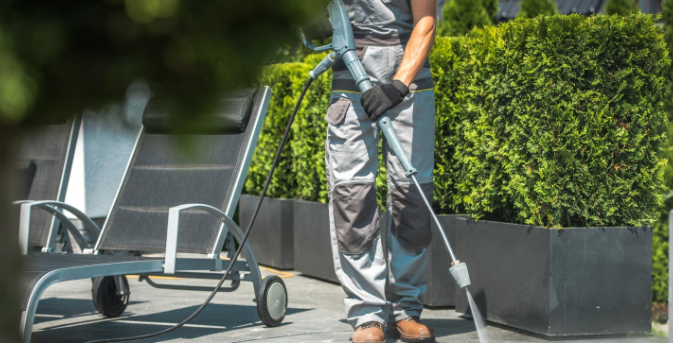
Restore your driveway or patio with expert clean concrete in Montana. Mar-Gar Construction removes salt stains and freeze-thaw damage. Get a free quote.
You spent all weekend shoveling snow off your driveway, and now that the last pile has melted, the concrete looks worse than it did in November. Gray streaks run from every crack. The surface is pitted and flaking near the garage apron. And that dark oil stain from your snowblower? It’s been there since October. If you own concrete in Montana, this scene isn’t a surprise — it’s spring. Clean concrete in Montana isn’t a cosmetic luxury. It’s preventive maintenance that determines whether your driveway lasts 15 years or needs full replacement after five.
Mar-Gar Construction has cleaned and restored concrete across the state — from Billings to Kalispell, Missoula to Bozeman — and the story is always the same. Property owners wait too long. They see the salt stains and surface scaling and figure a garden hose will handle it in June. By then, the damage is already deeper than it looks.
What Professional Concrete Cleaning Actually Involves in Montana
Professional concrete cleaning is more than pointing a pressure washer at your driveway and blasting away. In Montana, it starts with understanding what you’re actually trying to remove — and why standard methods often make things worse.
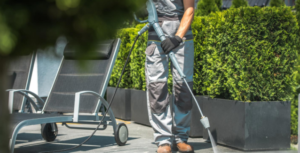
Working with clients in Montana, our team found that most homeowners grab a pressure washer from the hardware store and attack salt-stained concrete with maximum pressure. That approach drives the salty brine deeper into the pores instead of lifting it out. The stains reappear within weeks, and the high-pressure stream etches the surface, creating microscopic grooves that trap even more moisture and salt the following winter. Professional concrete cleaning uses a different sequence: chemical pre-treatment to break down salt deposits and organic stains, controlled pressure application calibrated to the concrete’s age and condition, and thorough extraction of residue so nothing gets redeposited into the pores.clean concrete in Montana
Montana’s climate demands this precision. The state sees temperature swings of 40 degrees or more within a single day during shoulder seasons. Concrete that absorbs water in October will have that water freeze, expand by roughly 9%, and create internal pressure that cracks the surface by January. If salt residue sits in those pores all summer, it attracts additional moisture and accelerates the cycle. Concrete surface cleaning isn’t just about appearance — it’s about removing the contaminants that turn your driveway into a sponge before the next freeze arrives.
Mar-Gar Construction evaluates each slab before cleaning. We check for existing spalling, map out crack patterns, and identify areas where deicing salts have already begun chemical deterioration. Our process includes hot-water surface cleaning for oil and grease removal, specialized salt-stain neutralization, and optional penetrating sealer application to block future moisture absorption.
The Real Challenge in Montana: Why Your Concrete Keeps Getting Worse
Montana property owners face a specific local challenge that most national concrete cleaning guides never mention: aggressive deicing salt use combined with extreme freeze-thaw cycling. The state DOT and most municipalities rely heavily on magnesium chloride and calcium chloride for winter road treatment. These chemicals are more destructive to concrete than traditional rock salt because they interact chemically with the calcium hydroxide in cement paste, creating expansive reaction products that weaken the surface from within.clean concrete in Montana
Here’s the objection most competitors won’t answer: “Can’t I just clean it myself with a pressure washer and some store-bought cleaner?”
You can try. But Montana’s concrete damage isn’t surface-level dirt. It’s chemical infiltration combined with physical freeze-thaw stress. Store-bought cleaners are formulated for mild climates where salt damage is minimal. They won’t neutralize magnesium chloride residue, and they won’t address the micro-cracking that lets next winter’s moisture penetrate even deeper. By the time the average homeowner notices visible damage, the deterioration has already reached a depth that requires professional-grade remediation.
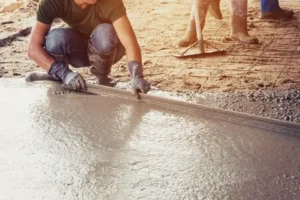
A client in Montana reached out when they noticed their three-year-old Bozeman driveway was flaking along the entire apron. They had cleaned it themselves the previous spring with a consumer pressure washer and a generic concrete cleaner from a big-box store. The surface looked fine for about two months. Then the following winter’s freeze-thaw cycles hit, and the damage accelerated because the DIY cleaning had opened the pores wider without sealing them. Mar-Gar Construction stripped the damaged layer, performed a deep chemical extraction of the salt residue, applied a silane-based penetrating sealer, and restored the surface with a polymer-modified overlay. The driveway has held through two winters since — no new flaking, no expansion of the original cracks.
This is the question competitors deliberately avoid: does cleaning your concrete actually protect it, or does it just make it look better for a season? Mar-Gar Construction’s approach treats cleaning as the first step in a maintenance cycle, not a standalone cosmetic service.
How Mar-Gar Construction Approaches Concrete Maintenance Differently
Most concrete cleaning companies in Montana fall into two categories: pressure washing outfits that treat every slab the same, or general contractors who clean concrete as a side service between bigger jobs. Mar-Gar Construction specializes in concrete maintenance — meaning we understand the material science behind what we’re cleaning and the environmental forces working against it.clean concrete in Montana
We don’t start with equipment. We start with an assessment of your concrete’s condition, age, exposure history, and the specific contaminants present. A driveway in Great Falls that sees heavy magnesium chloride exposure from municipal road treatment needs a different protocol than a patio in Whitefish shaded by pine trees and covered in organic tannin stains. Our concrete maintenance services include:
- Pre-cleaning inspection to identify active spalling, crack depth, and aggregate exposure
- Chemical pre-treatment using pH-balanced solutions that break down salt residue and oil deposits without attacking the cement paste
- Controlled hot-water surface cleaning with adjustable pressure based on concrete age — newer concrete requires gentler treatment to avoid damage to the still-curing surface layer
- Deep extraction and neutralization to remove all cleaning residue and dissolved contaminants
- Optional penetrating sealer application using silane or siloxane formulations that block moisture and salt intrusion for 5–7 years
- Crack repair and joint maintenance to prevent water infiltration at the most vulnerable points
Here’s the unique insight generic articles never mention: the best time to clean your Montana concrete isn’t spring — it’s late fall, before the first freeze. Most property owners wait until after winter to address the visible damage. By then, salt has been sitting in the pores for months, moisture has already penetrated the micro-cracks, and the next freeze cycle will exploit every weakness. Fall cleaning removes the season’s accumulated contaminants and gives you a clean surface to seal before winter arrives. Spring cleaning is damage control. Fall cleaning is prevention.
Mar-Gar Construction also tracks local road treatment schedules and advises clients on timing. If your property borders a state highway that gets heavy magnesium chloride application, we recommend more frequent cleaning cycles and heavier sealer protection than a residential street in a less trafficked area.
Practical Tips: What to Know Before You Hire a Concrete Cleaner
Before you book professional concrete cleaning, ask these questions:
What chemicals do you use, and are they safe for sealed or colored concrete? Harsh acids can strip integral color and damage decorative finishes. Mar-Gar Construction uses pH-neutral formulations safe for stamped, stained, and exposed aggregate surfaces.clean concrete in Montana
Do you extract the cleaning residue, or just rinse it into the yard? Salt-laden runoff kills grass and contaminates soil. We use recovery systems that capture and properly dispose of wastewater — especially important if your property has a septic system or borders a waterway.
Will you assess the concrete’s condition before cleaning? A reputable company should refuse to clean severely spalled or structurally compromised concrete without first addressing the underlying damage. Cleaning damaged concrete can accelerate deterioration.
What sealer options do you offer, and how long do they last? Film-forming sealers (acrylic or epoxy) change the concrete’s appearance and can trap moisture. Penetrating sealers (silane/siloxane) are invisible, breathable, and better suited to Montana’s freeze-thaw environment. Mar-Gar Construction recommends and applies penetrating sealers specifically formulated for chloride-exposed concrete.
In Montana, we’ve noticed that most homeowners and property managers forget to check whether their concrete was air-entrained during the original pour. Air-entrained concrete contains microscopic bubbles that give freezing water room to expand without cracking the matrix. If your driveway was poured without this admixture — common in older Montana construction — it is far more vulnerable to freeze-thaw damage regardless of how well you clean and seal it. Our technicians can evaluate air content during the initial inspection and advise whether cleaning alone is sufficient or if structural concerns require engineering consultation.
One local market-specific tip: If your property is in a Montana city that uses magnesium chloride for road treatment — which includes most major municipalities — avoid rock salt or calcium chloride on your own driveway. Layering different chloride types creates chemical reactions that accelerate paste disintegration. Use sand for traction instead, or switch to potassium chloride if you must use a deicer. Your concrete will last significantly longer, and your spring cleaning bill will be smaller.
Your Concrete Deserves More Than a Quick Rinse
Montana’s winters are hard on everything exposed to them — and your concrete driveway, patio, or parking lot takes the worst of it. Salt infiltration, freeze-thaw cycling, and UV exposure don’t just make concrete look bad. They destroy it from the inside out. Mar-Gar Construction provides clean concrete in Montana that actually protects your investment — not just for this season, but for the years ahead. Contact us today for a free concrete condition assessment and a cleaning plan built for your property and your local conditions.
FAQs
How much does professional concrete cleaning cost in Montana?
Most residential driveways in Montana run between $250 and $600 depending on square footage, stain severity, and whether sealing is included. Commercial parking lots and loading areas scale higher. Mar-Gar Construction provides itemized quotes after a free on-site evaluation — no surprises, no upsells on services you don’t need.
What’s the difference between concrete surface cleaning and pressure washing?
Pressure washing blasts water at high force, which can etch concrete and drive contaminants deeper. Concrete surface cleaning from Mar-Gar Construction uses controlled pressure, chemical pre-treatment, and residue extraction to lift stains without damaging the slab. Professional concrete cleaning also includes condition assessment and optional sealing for long-term protection.
How do I know Mar-Gar Construction is qualified to handle my concrete?
We hold Montana contractor licensing, carry full liability and workers’ compensation insurance, and have cleaned and restored concrete across the state from Billings to Kalispell. Our technicians are trained in concrete material science, not just equipment operation. References from current Montana clients are available on request.
How often should I have my concrete professionally cleaned in Montana?
For driveways exposed to municipal deicing salts, we recommend professional concrete maintenance every 12–18 months with sealer reapplication every 3–5 years. Shaded patios with organic staining may need less frequent service. Mar-Gar Construction customizes schedules based on your property’s exposure, traffic, and local road treatment practices.
Can cleaning fix spalling and cracking, or do I need replacement?
Cleaning alone won’t repair structural damage. Minor spalling can sometimes be addressed with resurfacing after deep cleaning and salt extraction. Extensive cracking or deep deterioration usually requires partial replacement. Mar-Gar Construction provides honest assessments — we’ll tell you when cleaning and sealing is enough and when replacement is the smarter long-term investment.